Turning Strategy into Compelling Proposals
by Jennifer Horn, MPA | JTS Grant Administrator
You’ve built a strong case for funding, aligned your project with funder priorities, and now it’s time to transform that strategy into a polished, persuasive proposal. The application preparation and submission phase is where many organizations falter—not from lack of passion, but from overlooking critical details, rushing the process, or failing to tell a cohesive, evidence-based story.
In 2026, the grant landscape demands even more precision. Federal and foundation opportunities are more competitive, with shorter application windows, heightened emphasis on measurable outcomes, data-driven narratives, and alignment with evolving priorities like rural health innovation, workforce development, and sustainable impact. Programs such as the Rural Health Transformation Program (RHTP)—with its $50B multi-year investment—require detailed transformation plans, specific objectives, performance metrics, stakeholder engagement, and governor endorsements, all submitted through structured portals like Grants.gov.
Trends intensifying this year include tighter scrutiny of eligibility and compliance, a shift toward community-centered outcomes (with less emphasis on certain prior terminologies), increased use of technology in proposals (e.g., data infrastructure and remote care), and funding uncertainty leading to compressed timelines. Successful applicants start early, customize relentlessly, and treat the proposal as a unified narrative that makes the reader care while establishing credibility.
The High Stakes of Preparation Rushed or generic proposals rarely win. Reviewers skim hundreds of applications—yours must stand out immediately with clarity, logic, and proof of impact. Common pitfalls include ignoring guidelines, weak needs statements, unrealistic budgets, or mismatched objectives. In contrast, winning proposals demonstrate:
- Deep alignment with the funder’s goals
- A clear “why” backed by data and stories
- Specific, measurable objectives
- Realistic timelines and budgets
- Strong evaluation plans
Quick Wins to Craft and Submit Winning Proposals Here are actionable steps to elevate your preparation and submission process in 2026:
- Start with Thorough Research and Alignment — Read the Notice of Funding Opportunity (NOFO) or guidelines multiple times—highlight key terms, eligibility, evaluation criteria, and required sections. Participate in webinars, review past award abstracts if available, and contact program officers early to clarify priorities. Ensure your project fits perfectly; if not, pivot to a better match to avoid wasted effort.
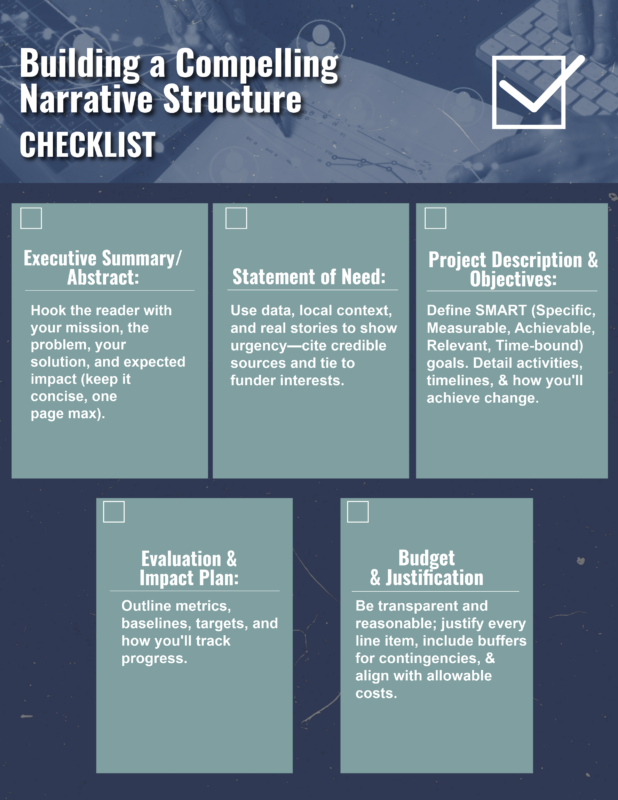
- Build a Compelling Narrative Structure — Organize your proposal around a logical flow: Executive Summary/Abstract: Hook the reader with your mission, the problem, your solution, and expected impact (keep it concise, 1 page max). Statement of Need: Use data, local context, and real stories to show urgency—cite credible sources and tie to funder interests (e.g., rural access barriers for RHTP). Project Description/Objectives: Define SMART (Specific, Measurable, Achievable, Relevant, Time-bound) goals. Detail activities, timelines, and how you’ll achieve transformative change. Evaluation and Impact Plan: Outline metrics, baselines, targets, and how you’ll track progress—funders demand proof of results. Budget and Justification: Be transparent and reasonable; justify every line item, include buffers for contingencies, and align with allowable costs.
Use numbered lists, headings, and white space for readability. Weave in evidence throughout to support your story.
- Assemble the Team and Timeline — Assign roles early: writer, budget lead, program expert, reviewer. Create an internal calendar with buffers—start 2-3 months ahead if possible. Set internal deadlines 1-2 weeks before submission to allow for reviews and technical fixes. For portals like Grants.gov or foundation systems, test compatibility and register early (e.g., maintain SAM.gov/UEI for federal).
- Polish, Proof, and Submit Strategically — Tailor boilerplate language but avoid generics. Get fresh eyes for feedback. Submit early to avoid last-minute glitches—many systems record submission time, and late entries are rejected outright.
At JTS, I don’t just guide clients through this critical phase with customized proposal development, compliance checks, budget modeling, and narrative refinement tailored to 2026 trends—my team creates detailed, outcome-focused, innovative proposals. This strategic support boosts competitiveness so you can secure funding that truly advances your mission.
The proposal isn’t just paperwork—it’s your organization’s story of change. Make it irresistible.
If proposal preparation feels daunting or you’re facing tight deadlines, let’s connect for a no-obligation consultation.
- Email me directly at 📧 jhorn@jtsfs.com
- Or call/text 📞 501.446.9418
What’s your top challenge in crafting proposals right now—alignment with guidelines, storytelling, budgeting, or submission logistics? Email me!